


The Department of Classics offers courses in ancient Mediterranean languages and literatures, including Greek, Latin, and Akkadian, as well as history, archaeology, science and medicine, and other aspects of the cultures of ancient Greece, Rome, the Near East, and Egypt. Our courses also explore how these ancient civilizations continue to influence contemporary language, art, politics, and religion.
The study of classical antiquity can serve as a strong base for a liberal arts education, and can be a rewarding supplement to any field, regardless of the student’s eventual career goals. A major or minor in classics can especially enrich programs in law, medicine, philosophy, religion, and history.
The study of antiquity challenges us with different values, ideas, and perspectives. We are committed to free and open debate in a context of tolerance and respect. Along with our professional organizations, the Society for Classical Studies (see also here), the Archaeological Institute of America, and the Classical Association of the Middle West and South, we condemn the misappropriation and misrepresentation of the history, peoples, images, and symbols of ancient Greece and Rome for ideologies of hatred and exclusion, particularly nationalism, racism, and white supremacy.
News
Undergraduate Student, Fish Fish, Presents at Spring 2026 American Chemical Society Meeting
Undergraduate Student Fish Fish Presents at Spring 2026 American Chemical Society Meeting

Maddalena Rumor promoted to Associate Professor with Tenure
Dr. Maddalena Rumor has been promoted to Associate Professor with tenure. The department congratulations Dr. Rumor for her much-deserved promotion.
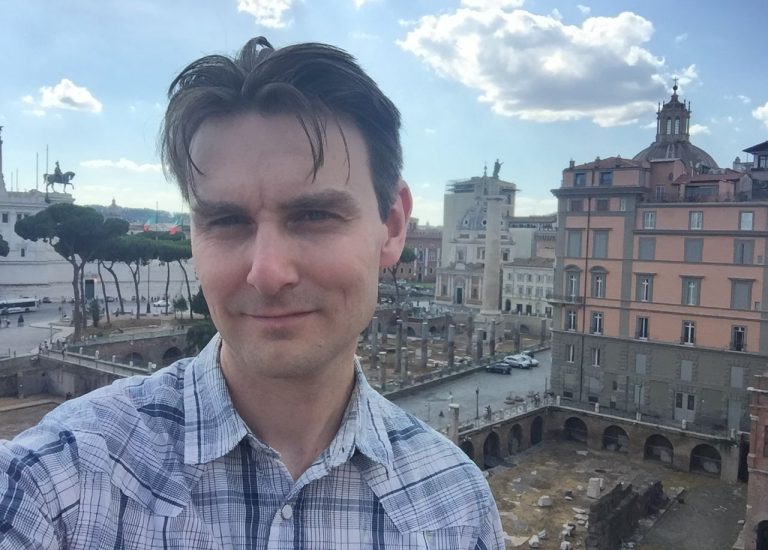
Mark D. Hammond receives The J. Bruce Jackson MD Award for Excellence in Undergraduate Mentoring
Mark D. Hammond receives The J. Bruce Jackson MD Award for Excellence in Undergraduate Mentoring
Three CWRU Students Win National Latin Translation Exam Prizes
Three CWRU Classics students won prizes for the Classical Association of the Middle West and South (CAMWS) International Latin Translation Exam this year. Please join me in congratulating Nicholas Stewart, Eleanor Hirt, and Iris Chen for each winning a Certificate of Commendation at the Advanced Level. These are awarded to only a...
Department Office
Hours:
Monday-Friday, 8:30am-4:30pm
Closed for Lunch 12:30pm-1:00pm
Phone:
216.368.2348
Email:
classics@case.edu
Department Spotlight
Related Sites
